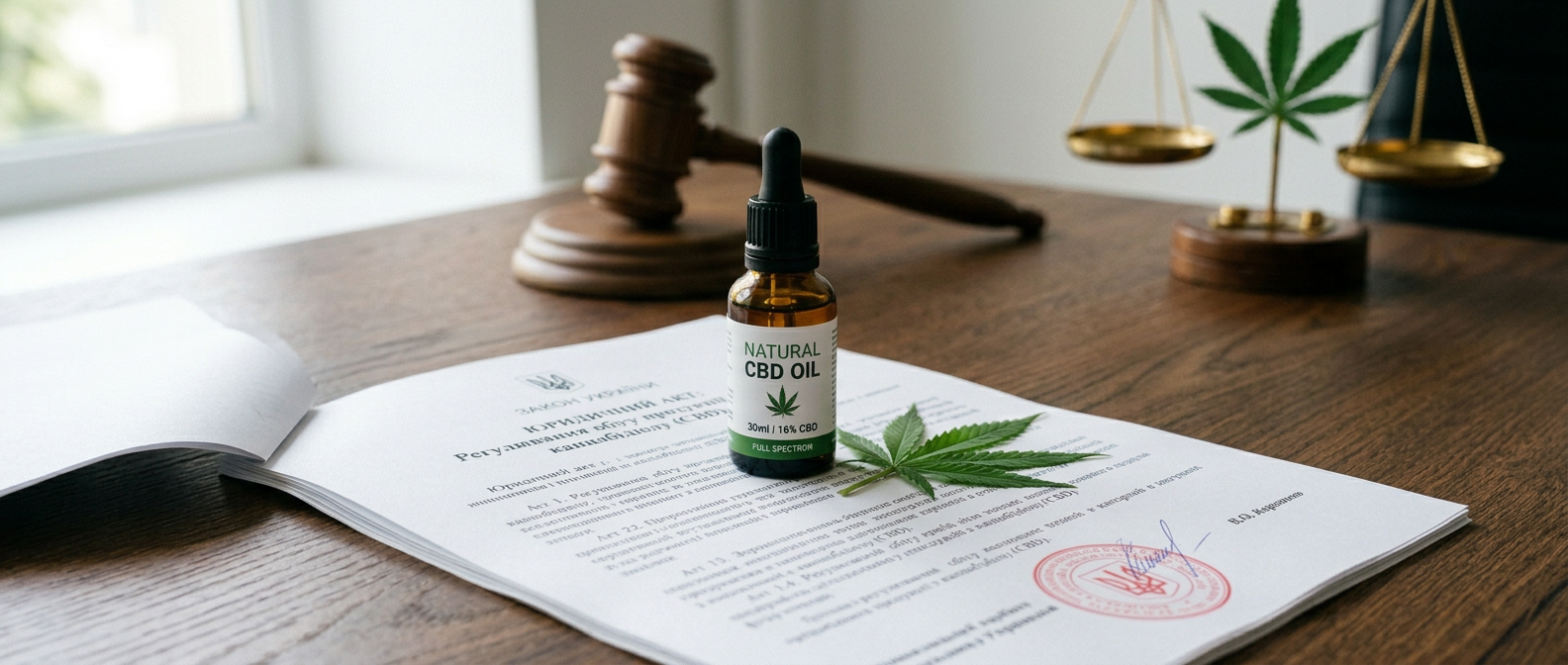
Cannabidiol (CBD) is one of the main active compounds in hemp which, unlike THC, has no psychoactive properties. Today, the use of CBD in dietary supplements, cosmetics and food products is a global trend. Research confirms its calming, anti-inflammatory and neuroprotective properties, creating huge consumer demand.
However, the regulation of CBD in Ukraine remains a complex issue. Legal uncertainty in the field of food supplements is causing legitimate concerns among both manufacturers and consumers. Let’s take a closer look at the risks involved and how to legally bring such a product to market.
On 16 August 2024, the long-awaited Law of Ukraine No. 3528-IX, which regulates the use of cannabis plants for medical purposes, came into force. This legislation establishes a framework for the use of cannabinoids in medicinal products under strict control.
However, for manufacturers of CBD supplements, the situation remains unclear:
As a result, the market for food products containing cannabidiol has effectively ended up in a legal grey area.
Companies planning to manufacture or import CBD supplements face four main barriers.
Hemp extract can be classified in various ways:
The importation of hemp extracts is strictly regulated. Businesses must comply with the provisions of the Law of Ukraine ‘On Narcotic Drugs…’, undergo specific customs checks and must have laboratory confirmation that the THC content does not exceed the limits permitted by law.
The labelling of dietary supplements requires particular care. Any claims regarding the product’s therapeutic properties automatically classify it as a medicinal product in the eyes of the law. The use of medical claims is strictly prohibited for dietary supplements.
The manufacturer is required to provide documentary evidence of the product’s safety. This includes verifying the stability of the formulation, the purity of the extract, the absence of psychoactive impurities, and conducting a toxicological assessment.
We have a track record of successfully supporting CBD product manufacturers. We help businesses navigate the journey from concept to shelf, whilst minimising regulatory risks.
Result: thanks to the systematic preparation of documents, analysis of product composition and correct product positioning, our clients significantly reduce the risks involved in customs clearance and dealings with regulatory authorities.
Despite the popularity of cannabidiol, Ukrainian consumers often have reservations before making a purchase due to:
The market for CBD in dietary supplements has enormous potential for growth. However, its full development depends on the adoption of relevant secondary legislation, the official recognition of CBD’s status as a food ingredient, and the establishment of transparent regulatory frameworks.
Whilst these regulations are being drafted, manufacturers should proceed with the utmost caution: they should carry out a professional legal analysis and risk assessment, and strictly comply with the technical regulations currently in force.
Today, CBD is more than just a passing fad. It is a prime example of an industry where innovation is far outpacing regulation. Professional legal and technical support is now one of the key tools for mitigating regulatory risks and ensuring a smoother market launch for products.
